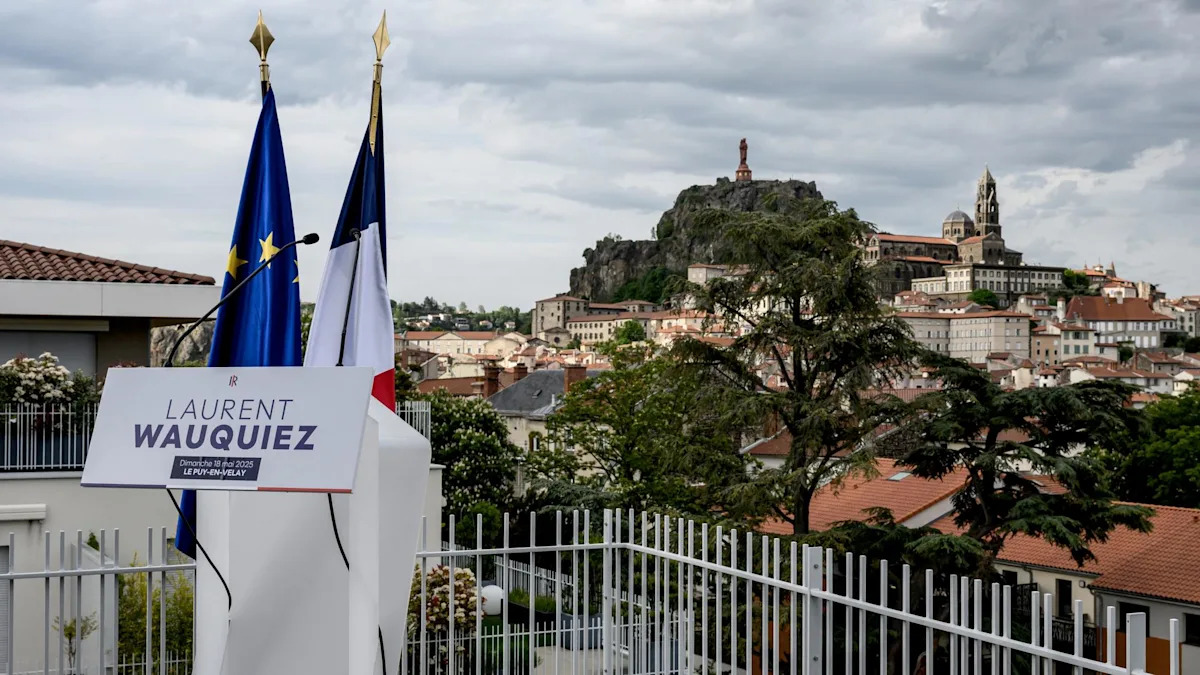
Baptiste Wauquiez: A Glimpse into the Life of a Politician's Son from Puy-en-Velay
In the often intense and highly scrutinized world of French politics, the private lives of public figures rarely remain entirely out of the spotlight. This was particularly evident when Baptiste Wauquiez, son of prominent French politician Laurent Wauquiez, made an appearance in the pages of the illustrious Paris Match magazine. The feature offered a rare and intimate look into the family life of the Wauquiez clan, centered around their cherished home in Puy-en-Velay, a historic commune in south-central France. For many, this moment underscored the delicate balance political families must strike between public duty and personal privacy, especially when it involves their children.
The primary focus of this article is to delve into the details surrounding Baptiste Wauquiez's public appearance, exploring the context of his family's life in Puy-en-Velay: Inside the Wauquiez Family Home with Baptiste, and what it means for a young individual to grow up with a parent in the national political arena. We'll examine the significance of the "baptiste wauquiez puy" connection, the cultural nuances of French political families, and the broader implications of media exposure for children of public figures.
The Paris Match Feature: A Window into Family Life in Puy-en-Velay
On October 8, 2017, readers of Paris Match were treated to an exclusive feature showcasing Laurent Wauquiez, then the vice-president of the Parti Les Républicains, alongside his wife Charlotte and their two children, Baptiste and Louise. The setting for this intimate photoshoot was none other than their family home in Puy-en-Velay, a choice that speaks volumes about the politician's roots and connection to his local constituency. At the time of the feature, Baptiste was 14 years old, and his sister Louise was 11.
The decision to open up their home to a national publication like Paris Match is a common strategy for politicians seeking to humanize their image and present themselves as relatable family individuals. For Baptiste, this meant a temporary immersion into the public eye, a moment that would inevitably contribute to public perception of his father and the family as a whole. The photographs likely captured moments of domesticity, perhaps showing the family in their garden, in a living room setting, or enjoying everyday activities, all designed to convey a sense of normalcy despite their extraordinary circumstances. This glimpse into the Wauquiez family's personal sphere from their base in Puy-en-Velay became a significant point of interest for both political observers and the general public, highlighting the strong bond between Baptiste and his parents.
The Significance of Location: Why Puy-en-Velay Matters
- Roots and Authenticity: For Laurent Wauquiez, Puy-en-Velay is not just an address; it's a profound connection to his origins and his electorate. Featuring the family at home underscores his commitment to his local roots, portraying him as a man of the people, deeply embedded in his community.
- Contrast with Parisian Politics: By showcasing their home life away from the hustle and bustle of Paris, the feature emphasizes a grounded, perhaps more traditional, image. This contrast can be a powerful political tool, differentiating him from career politicians perceived as disconnected from provincial life.
- Personal Sanctuary: Despite the media intrusion, the home in Puy-en-Velay likely represents a sanctuary for the Wauquiez family, a place where they can retreat from the pressures of political life and maintain a semblance of ordinary existence. For Baptiste, it's presumably the primary place where he feels a sense of belonging and privacy.
The Wauquiez Family Dynamic: Beyond the Political Arena
At the heart of the Paris Match feature was the family itself: Laurent, Charlotte, Baptiste, and Louise. Laurent Wauquiez's political career is well-documented; his ascent through the ranks of the Parti Les Républicains, his roles as a minister, and later as President of the Auvergne-Rhône-Alpes regional council, have placed him firmly in the national political discourse. However, the media's focus on his family offers a different dimension to his public persona.
Charlotte Wauquiez, as the spouse of a prominent politician and mother of their children, plays a crucial role in maintaining the family's stability and public image. While often operating behind the scenes, her presence in such features helps to complete the family portrait, signaling support and unity. For Laurent Wauquiez's Son Baptiste: Family Life in Puy-en-Velay, growing up in this environment means being exposed to the unique challenges and opportunities that come with being part of a political dynasty.
Insights into French Political Families and Media
French media, particularly publications like Paris Match, often dedicates significant attention to the families of politicians. This is not merely celebrity gossip but often serves a political purpose, allowing candidates to project certain values—family, stability, tradition—that resonate with voters. However, it also raises questions about privacy and the extent to which children, who have not chosen a public life, should be featured.
In France, there's a delicate balance. While the media often respects the privacy of children more than in some other countries, a strategic feature can be a powerful tool. It allows the politician to control the narrative, offering a curated glimpse into their home life while minimizing unauthorized intrusions. For the Wauquiez family, their appearance in Paris Match was a calculated move to reinforce Laurent Wauquiez's image as a grounded family man from Puy-en-Velay.
Navigating Public Scrutiny: Lessons for a Politician's Child
For children like Baptiste Wauquiez, growing up as the son of a high-profile politician means a childhood quite different from their peers. The occasional media feature, like the one in Paris Match, is just one aspect of constant public awareness. From school events to family outings, there's always an underlying understanding that their lives are subject to greater scrutiny. This necessitates developing certain coping mechanisms and a strong sense of self.
Tips for Children and Families in the Public Eye:
- Foster a Strong Support System: Having a close-knit family and a network of trusted friends is paramount. These relationships provide a sense of normalcy and emotional stability amidst the public gaze.
- Prioritize Privacy: While public appearances might be necessary, families should define clear boundaries for their children's privacy. Not every aspect of their life needs to be public.
- Develop Resilience: Children of public figures often face criticism directed at their parents. Learning to differentiate between personal attacks and constructive feedback, and developing emotional resilience, is crucial.
- Encourage Authenticity: While there's pressure to maintain a certain image, encouraging children to be true to themselves helps them build self-esteem and navigate the artificiality of public life.
- Educate About Media: Teaching children about how the media works, its potential biases, and the importance of critical thinking can empower them to understand and process public narratives.
For Baptiste Wauquiez, living in Puy-en-Velay likely offers a degree of insulation from the intense media scrutiny of Parisian life, but the awareness of his father's public role is undoubtedly ever-present. His parents, Laurent and Charlotte, would have a key role in guiding him through these experiences, ensuring he develops a healthy perspective on his unique upbringing.
The Legacy of a Name: Baptiste Wauquiez's Potential Future
The name Wauquiez carries a certain weight in French political circles. As the son of a prominent figure, Baptiste Wauquiez inherits not just a surname but also a degree of public recognition and expectation. While his appearance in Paris Match was a snapshot in time at age 14, it inevitably raises questions about his future path.
Will Baptiste follow in his father's footsteps, embarking on a political career? Or will he carve out a completely different path, perhaps in the arts, sciences, or business, away from the political spotlight? Many children of politicians choose to avoid politics, seeking a more private existence, while others embrace the family legacy. The influence of his upbringing in Puy-en-Velay, surrounded by local history and his father's commitment to the region, could certainly shape his civic awareness and sense of duty.
Ultimately, Baptiste's future will be his own to define. His early exposure to public life, however, will have undoubtedly instilled in him a unique understanding of leadership, public service, and the delicate balance between personal ambition and public responsibility. Whatever path he chooses, the foundation laid in the family home in Puy-en-Velay will undoubtedly play a significant role.
Conclusion
The feature on Baptiste Wauquiez in Paris Match was more than just a family photo spread; it was a curated moment providing insight into the private world of a leading French political family. Centered around their home in Puy-en-Velay, the article underscored the human dimension of political life, showing Baptiste Wauquiez as a young man growing up amidst the unique circumstances of a father in national politics. The connection between "baptiste wauquiez puy" highlights the importance of place, family values, and local roots in shaping the identity of public figures and their children. As Baptiste continues to grow, he will undoubtedly navigate the complexities of his surname with a blend of privacy and the occasional public gaze, shaped by the experiences of his formative years in the heart of France.